
Uncensored Network Architecture: Why Streaming Platforms Rely on Offshore Servers
If you’re trying to run a modern video streaming platform, whether it’s a video-on-demand (VOD) portal, live streaming, sports event rebroadcasting, or a restricted content ecosystem, the traditional corporate cloud is your biggest enemy.
You’ve been sold the myth that AWS, Google Cloud, or Azure are the only paths to scalability. What they haven’t told you is that these platforms operate under a puritanical, rigid, and financially punitive compliance regime.
Try transferring petabytes of video data through there: the exorbitant Data Transfer Out charges will break your company’s cash flow. Try dealing with a single non-compete notice or DMCA takedown notice generated by competitors’ bots: the home data center will pull the plug on your dedicated server without giving you a chance to defend yourself, destroying your organic traffic and brand authority (EEAT) overnight.
High-level streaming doesn’t tolerate amateurism. If a user’s player freezes for 2 seconds due to buffering, they abandon the site. To maintain absolute control over your data, predictable costs, and immunity from commercial censorship, infrastructure engineering demands the strategic use of Offshore Servers structured on bare-metal hardware, such as those provided by offshorededicatedservers.com.
1. The Iron Triangle of Media Streaming
Setting up a video streaming infrastructure involves balancing three critical variables. If one of them fails, the entire operation collapses.
- Dedicated Bandwidth: Streaming requires continuous throughput. Common network ports experience throttling at peak concurrency.
- Storage IOPS: Videos require massive synchronous reading of large files. Mechanical hard drives or SSDs connected via a virtual network create instant bottlenecks.
- Jurisdictional Isolation: Your server needs to be located in a jurisdiction where local laws prevent foreign attempts to arbitrarily take down content.
2. The Geopolitics of Offshore Servers: Real Protection vs. Web Mythology
In the technology market, the term “Offshore” has been distorted. Amateurs believe it means hiding slow servers on isolated tropical islands. Infrastructure engineers know that it’s actually about regulatory arbitrage and network density .
Shielded Jurisdictions (Netherlands and Iceland)
By locating your offshore servers in countries like the Netherlands, your application becomes protected by the strict local legal framework. The Dutch legal ecosystem does not accept automated takedown orders from other countries.
For any content to be removed or a server to be reviewed, the complainant must go through a formal process that requires unequivocal proof of infringement under local law. This neutralizes 99% of false-positive copyright attacks from competitors intended to take down your live streams.
Tier-1 Connectivity and Internet Exchange Points (IXPs)
The choice of the Netherlands or Germany for offshore streaming servers is not just a legal one; it’s a physical one. Amsterdam is home to AMS-IX (Amsterdam Internet Exchange) , one of the world’s largest connectivity hubs.
Hosting your bare-metal hardware directly connected to this point means that video packets leave your NVMe drives and enter the telecom operators’ backbone serving the end user. Transatlantic latency is minimized because data travels exclusively via direct routes from Tier-1 providers (such as Telia, NTT, Cogent, and Level 3), eliminating hops through congested routers.

3. Bare-Metal Hardware Engineering for Video Distribution
Video streaming consumes resources directly from the silicon. You cannot run a scalable media platform on virtual shared instances (VPS) or public clouds where CPU is shared with other tenants (noisy neighbors). The solution requires pure bare-metal dedicated servers.
High-Density Processors (AMD EPYC and Intel Xeon)
Modern streaming delivery requires the server to perform video transcoding processing (converting the original file or live feed to multiple resolutions, such as 1080p, 720p, and 480p, in real time).
To handle this load without crashing the application, the hardware needs high-core-density processors, such as the AMD EPYC line with 32 or 64 cores. This ensures the computational capacity to run dozens of FFmpeg instances simultaneously while maintaining a stable system response time.
Ultra-high-speed storage: Enterprise NVMe in RAID 10
When hundreds of users watch different videos on your platform simultaneously, the storage subsystem is bombarded with random read requests. If your disk reaches its IOPS (Input/Output Operations Per Second) limit , the players will freeze.
The correct architecture inoffshored dedicated servers. Requires Enterprise-Class NVMe Disks configured in hardware RAID 10. RAID 10 splits video data across multiple disks (multiplying read speeds to levels above 6,000 MB/s) and maintains identical mirrored copies. If a physical disk fails during a live stream, the server remains online without losing a single frame.
Dedicated Network Ports from 10 Gbps to 40 Gbps Non-Metered
This is where streaming platforms die in the traditional cloud. On AWS, you pay for every gigabyte that goes from the server to the internet. On high-traffic streaming platforms, this metric results in chaotic bills totaling tens of thousands of dollars.
Efficient engineering utilizes dedicated, unmetered 10 Gbps network ports . A real 10 Gbps port, allocated exclusively to your physical network card on the data center switch, allows you to transfer multiple Petabytes of video per month at a fixed, linear cost. There are no surprises on the bill, allowing you to calculate the exact infrastructure cost per active user.
4. Architecture Matrix: Enterprise Cloud vs. Offshore Servers
| Technical Variable | Traditional Public Cloud (AWS / GCP) | Offshore Servers Bare-Metal |
| Financial Predictability | Variable and punitive billing (charged per GB). | Fixed monthly bill with 10 Gbps port included. |
| Processing Performance | Virtual intermediate layer (vCPU latency). | Direct access to silicon (zero CPU latency). |
| Reading/Writing Speed | Network-limited virtual disks (EBS). | NVMe Local connected to the PCIe bus. |
| Legal Resilience | Automated takedown via DMCA takedown in minutes. | Filtering based on the laws of the local jurisdiction. |
| Infrastructure Control | Environment controlled by opaque host policies. | Full root access to the basic operating system. |
| Operation Privacy | Traffic monitoring and data cross-referencing. | Focus on privacy and acceptance of cryptocurrencies. |
5. Optimized Video Delivery Architecture (HLS / MPEG-DASH)
To get the most out of your Offshore Servers for streaming platforms, you should abandon the old model of delivering raw video files (such as an .mp4static file). This format forces the user’s browser to download the entire file, unnecessarily increasing bandwidth consumption.
Modern media engineering utilizes the HLS (HTTP Live Streaming) protocol .
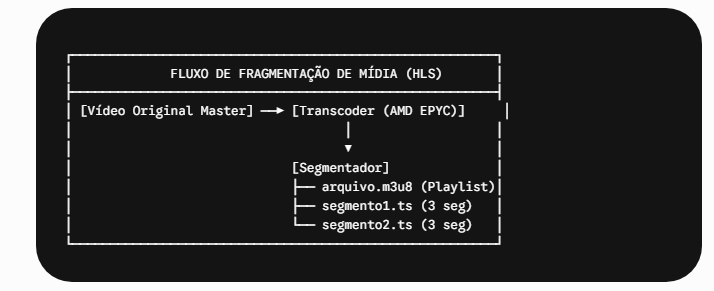
- Segmentation: The server takes the master video and fragments it into small media transport blocks (files .ts or .m4s) 2 to 4 seconds long.
- Manifest Creation: A lightweight index file (.m3u8) is generated. The user’s player reads this text file and sequentially requests video blocks.
- Adaptive Bitrate (ABR): The server stores the same video in different qualities (1080p, 720p, 480p). If the user’s 4G/5G connection fluctuates, the player detects the drop and requests the next 3-second fragment in a lower resolution, completely invisibly to the viewer. This eliminates buffering entirely and optimizes server delivery.
6. Security Hardening for Isolated Servers
Operating outside of traditional public clouds requires you to take responsibility for edge security. A streaming-focused server with 10 Gbps connections becomes a prime target for denial-of-service attacks and brute-force intrusion attempts.
Protection against Layer 7 (DDoS) attacks.
Common volumetric attacks (such as UDP floods) are filtered directly at the hardware appliances (Corero or Arbor) at the edge of the data center. offshorededicatedservers.com. However, streaming platforms suffer greatly from Layer 7 attacks (HTTP Flood), in which bots disguised as real users request video links thousands of times per second to exhaust the server’s CPU resources.
To mitigate this, configure Nginx to act as an aggressive reverse proxy in front of your application. Use the module limit_req to limit_connblock IPs that attempt to open simultaneous connections outside of standard human behavior, thus protecting your system’s execution stack.
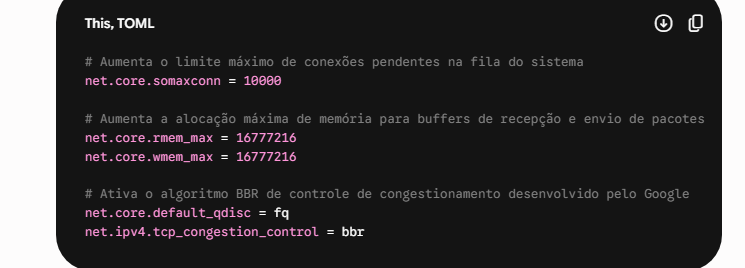
Linux Kernel Tuning for High Network Performance
By default, Linux is configured for general use in offices or low-load servers. To handle massive traffic on 10 Gbps ports, you need to optimize the kernel parameters by editing the file.
Conclusion: Ensure the Autonomy of Your Media Ecosystem
Treating streaming platform infrastructure as a cheap commodity or blindly relying on hyperscale cloud providers is a fatal strategic error. In the modern internet, if your business doesn’t have direct control over the hardware and jurisdiction where the data resides, you don’t have a stable enterprise you have a project vulnerable to third-party compliance decisions.
Migrate your critical applications to offshore servers mounted on a dedicated bare-metal architecture. offshorededicatedservers.com. It resolves this vulnerability. You combine the brute force of high-density enterprise processors and the instantaneous read speed of NVMe arrays in RAID 10 with the legal security of strategic international data centers and clean traffic channels over stable, unmetered 10 Gbps ports.
Protect your intellectual property, eliminate the risks of variable billing, and deliver a fast, uninterrupted streaming experience to your global audience.
Frequently Asked Questions (FAQs)
1. Will hosting my videos on an offshore server in Europe cause slowdowns for users in other regions of the world?
No, if the transit network is Tier-1. The digital video signal travels through intercontinental fiber optic cables at the speed of light. The factor that causes buffering in video transmissions is not purely geographical distance, but rather packet loss due to congested routers on low-cost carriers.
Because the network infrastructure used in professional Offshore Servers is directly connected to the largest global backbones, latency remains stable and imperceptible, as the HLS protocol pre-loads the next few seconds of media in the user’s player even before the current block finishes playing.
2. What happens if my server receives a copyright infringement complaint?
Unlike domestic hosts that impose immediate automatic suspensions without checking the information, legitimate offshore server providers strictly comply with the laws of their own jurisdictions. When a complaint is received, it is forwarded to you so that your technical or legal team can present a defense within a reasonable timeframe.
If the complaint is a false positive by a competitor intended to sabotage your traffic, the server remains online while the legal merits are assessed from a local civil perspective, ensuring your business’s continuity.
3. How can I prevent other websites from stealing my streaming links to run on external players (Hotlinking)?
The best defense is to implement secure token authentication directly in Nginx using the secure_link module. When your website renders the player page for a legitimate user, your backend generates a temporary cryptographic hash that includes the user’s IP address and an expiration time (e.g., 2 hours).
The Nginx installed on the offshore server validates this hash before releasing each .tsvideo fragment. If someone copies the manifest URL and tries to use it on another domain or IPTV application, access will be rejected with a 403 (Forbidden) error.
4. What is the real practical difference between “Metered” and “Unmetered” bandwidth?
In the metered model, you have a fixed monthly traffic allowance (e.g., 30 TB). If your streaming platform gains traction or suffers an attack that consumes this bandwidth before the end of the month, your server is shut down, or you are charged exorbitant extra fees for each gigabyte exceeded.
In the unmetered model , you rent the maximum physical capacity of the line (e.g., a dedicated 10 Gbps port). You gain the right to transmit data at the maximum limit of that line 24 hours a day, consuming petabytes of data without any monitoring, barriers, or changes to your monthly fee. Can I install visual control panels like cPanel to manage my dedicated streaming server?
5. Can I install visual control panels like cPanel to manage my dedicated streaming server?
Technically, yes, but it’s a terrible engineering practice. Traditional control panels like cPanel or Plesk were created to manage shared hosting servers for static websites. They install dozens of background services, complex firewalls, and routines that consume valuable RAM and CPU cycles that should be entirely dedicated to video processing and network packet delivery.
The professional standard for streaming servers is to use a clean Linux distribution (such as Ubuntu Server) managed via SSH and to structure web services and databases in an isolated, lightweight way using Docker containers.